30th April 2025
This month NRT project scientist Helen Jermak was invited to attend the AI-Empowered Astronomy for Open Science conference at the Zhejiang Lab in Hangzhou China. The conference was organised as part of the 'International Decade of Sciences for Sustainable Development', part of. UNESCO's Strategic Plan for the Implementation of the Science Decade. The Decade stakeholders were invited to develop, implement and engage in a variety of initiatives to achieve the goal that by 2033, open science is widely and equitably used to democratise scientific processes and ensure access to scientific knowledge.
Astronomy is an ideal topic for open science as the skies belong to us all. This area, like many others, has entered a new AI-empowered era particularly in the area time-domain and multi-messenger observations of the dynamical Universe. As part of this new era, which NRT is part of, we anticipate breakthroughs in revealing new physics on the extreme conditions of high energy, density, gravity and magnetic fields. But this will not be possible without collaborative international efforts. As one example of open science in astronomy, Zhejiang Lab and NAOC recently announced an international big science program; the Global Open Transient Telescope Array (GOTTA), to UNESCO with the ambition to promote collaborative infrastructure for time-domain astronomy driven by AI.
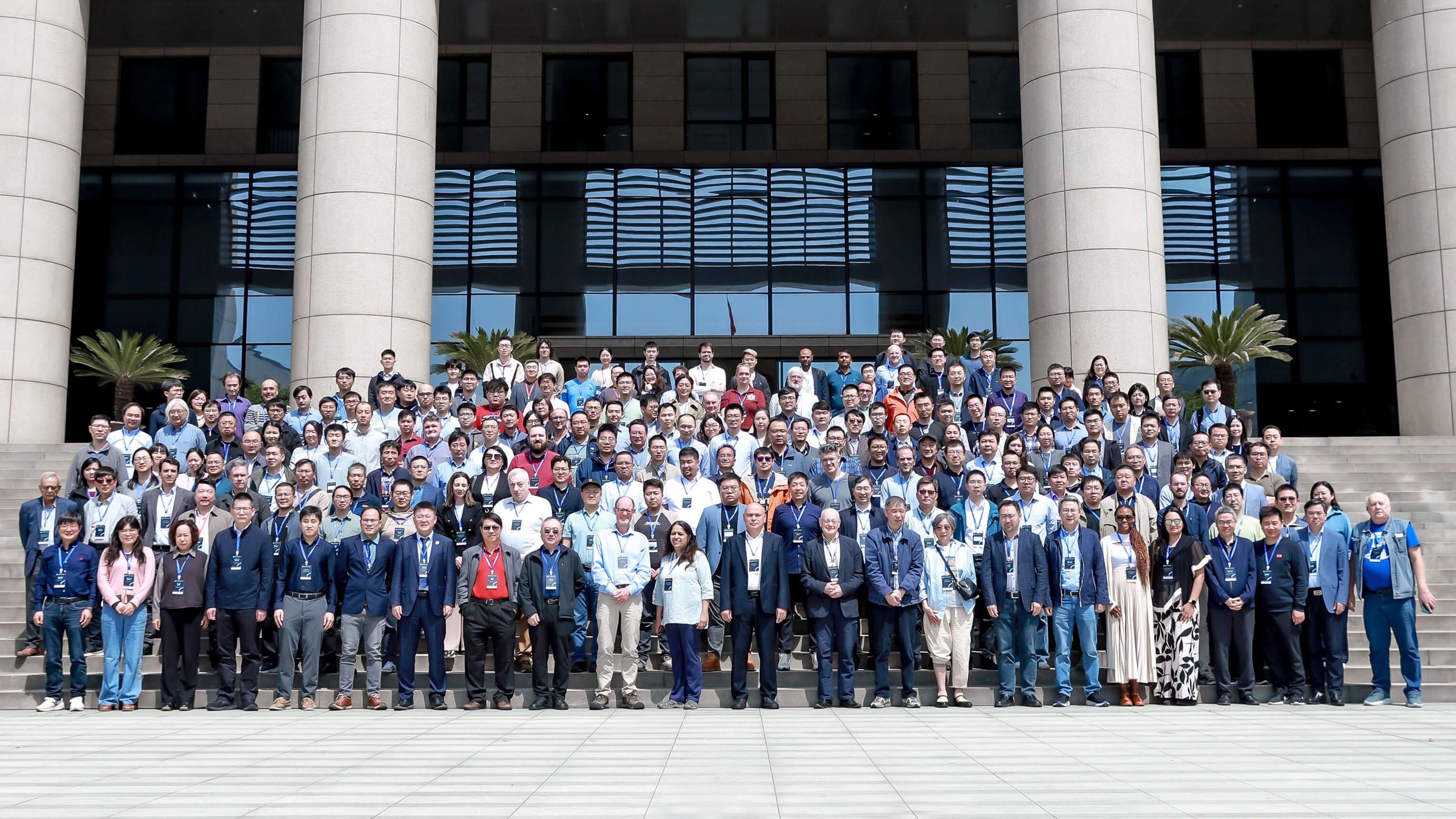
Group photo at the AI-empowered astronomy for open science conference in Hangzhou, China in April 2025.
Driven by the urgent need to build consensus in the community to develop open and interdisciplinary solutions, Zhejiang Lab and NAOC joint-hosted this conference, titled AI-Empowered Astronomy for Open Science, on 7-9th April 2025 at Zhejiang Lab, Hangzhou. This meeting hosted speakers from around the world covering a wide range of topics such as:
Globally distributed telescope arrays for time-domain observations (such as GOTTA)
The role of AI in today’s and future astronomy
Infrastructures and other resources to share for international collaborations
Science outreach and education
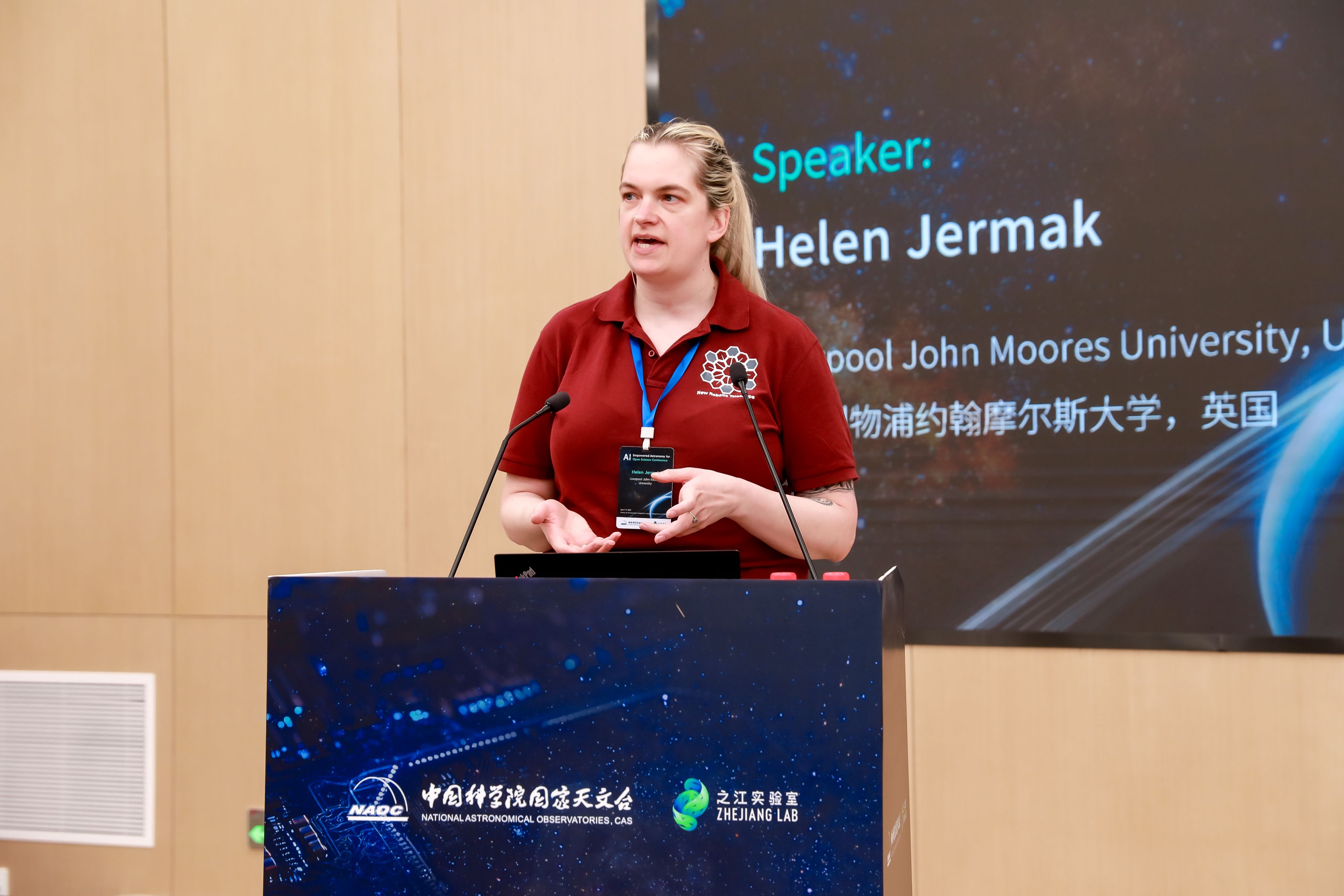
Helen presented an NRT overview and also highlighted the different projects on-going at the LT and NRT using AI such as intelligent scheduling, cloud tracking and weather predictions and automated calculation of exposure times based on weather conditions.
Helen speaking at the conference
Helen met with a variety of collaborators at the conference including Fernanda Abárzuza and Miguel Alarcon from Light Bridges, Carlos Guíterrez (IAC NRT PI), David Buckley (South African Astronomical Observatory) and Ulisses Barres De Almeida (Centro Brasileiro de Pesquisas Físicas).
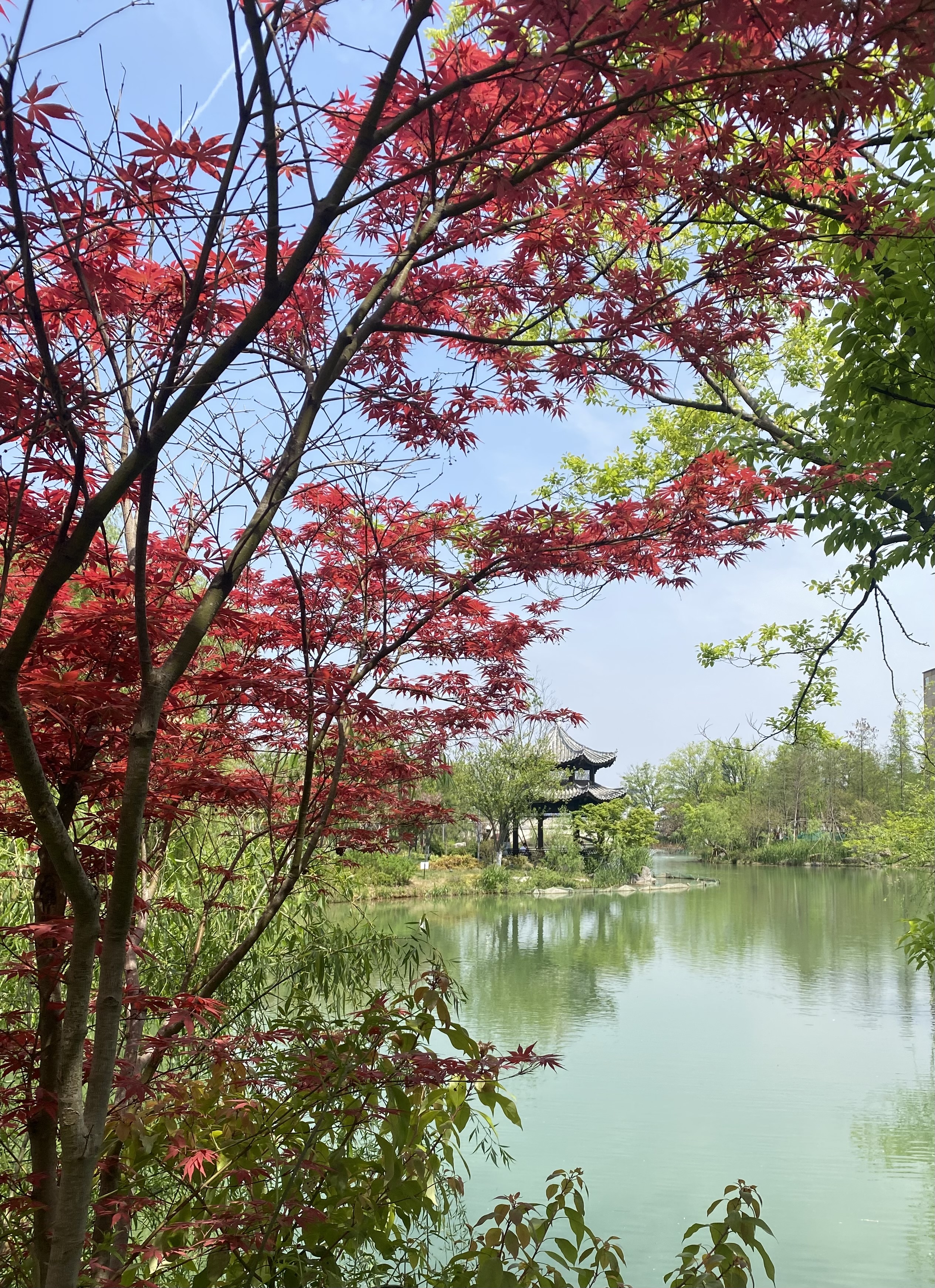
During the trip Helen took part in a tour the scientific research platforms of Zhejiang Lab, enjoyed exploring the beautiful grounds of the lab and visited the famous Lingyin Temple and the bustling city of Shanghai. She said 'I really didn't spend long enough exploring all the amazing sights in Hangzhou and Shanghai. The conference was very interesting and our hosts were so welcoming, I can't wait to return!'.
Photo taken by Helen of the beautiful grounds of Zhejiang Lab
Photos and information taken from the AI-Empowered Astronomy for Open Science website: https://en.zhejianglab.com/newsevents/aie_astro