1st December 2025
On 27th and 28th November 2025, the Instituto de Astrofísica de Canarias (IAC) hosted a meeting between representatives of the partner institutions of the New Robotic Telescope (NRT): the IAC itself, Liverpool John Moores University (LJMU), the University of Oviedo, and a delegation from the National Astronomical Observatories of China (NAOC) headed by its director, Liu Jifeng. The meeting served to analyse the current status of the project and to define the steps required to formalise China’s incorporation into the international NRT consortium.
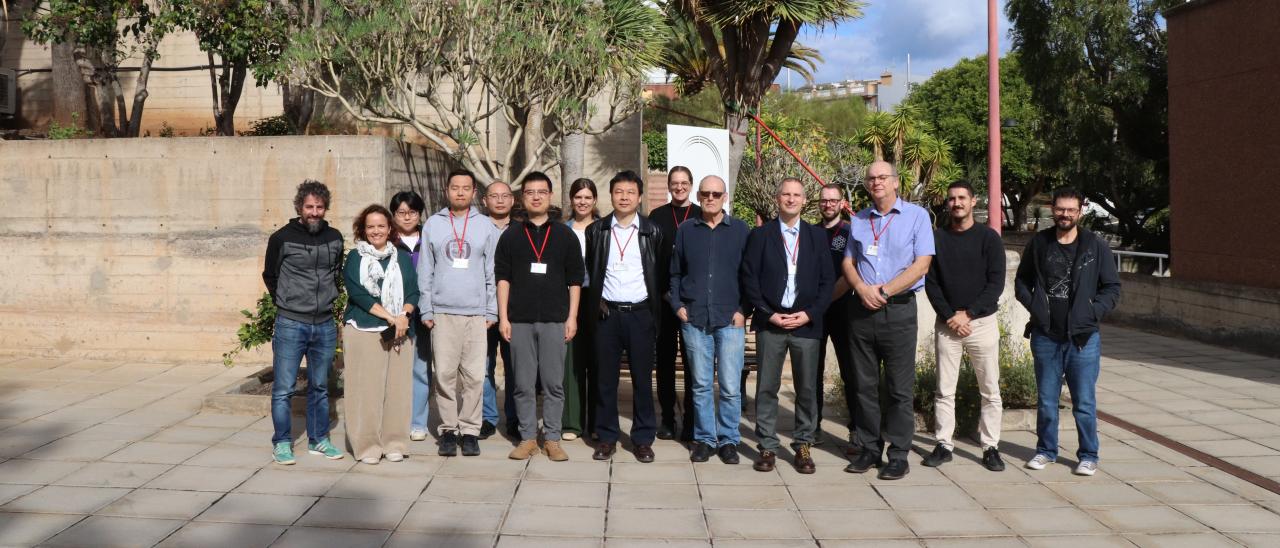
NAOC’s participation opens up a major opportunity for scientific cooperation between the NRT; the future 4-metre robotic telescope to be installed at the Roque de los Muchachos Observatory (La Palma), and the Chinese SITIAN/GOTTA telescope network. This synergy will allow the exploration of joint plans for the global monitoring of transient phenomena, a key field in modern astrophysics.
The meeting was also attended by the IAC Director, Valentín Martínez Pillet. During the sessions, the delegations reviewed the current status of the project and outlined the next steps towards the creation of an international consortium. According to Carlos Gutiérrez, Principal Investigator of the IAC’s participation in the NRT, “NAOC’s involvement will give a strong boost to the project and opens the door to future scientific and technological collaborations.”
Ana Fragoso presents information about the IAC advanced optical systems centre
The proposed development lines converge on the goal of creating an infrastructure capable of responding rapidly to transient events such as supernova explosions, gamma-ray bursts or neutron-star mergers and other phenomena known as time-domain astronomy. “The challenge for the NRT is to ensure that all its systems; mechanics, optics, control and software, work in a fully coordinated way to capture extremely short-lived events in a tiny region of the sky before they disappear”, says Graciela Delgado, systems engineer for the NRT.
The NRT is designed to be the largest, fastest and most advanced robotic telescope of its kind, with a response time of around 30 seconds. According to Iain Steele, Principal Investigator of the project for LJMU “There is a perfect synergy both in technology and science between the NAOC and the existing NRT partners, and it was very exciting to understand how we could all work together to make the new telescope a reality.”
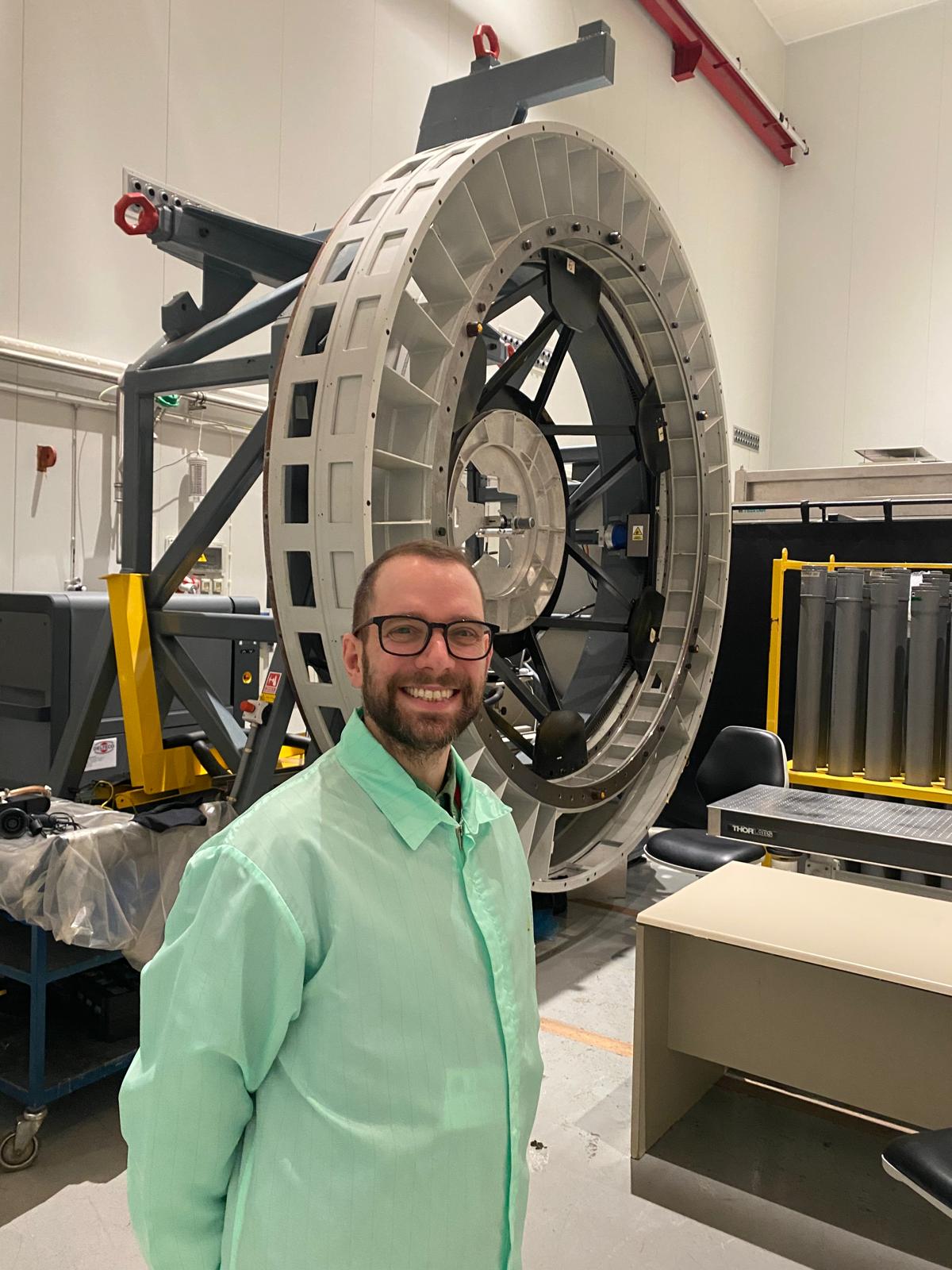
As part of the visit, NRT team members from LJMU, along with the other participants of the meeting, were able to visit the optics labs and see the extensive range of equipment the IAC have been using to build instrumentation and measure optical performance.
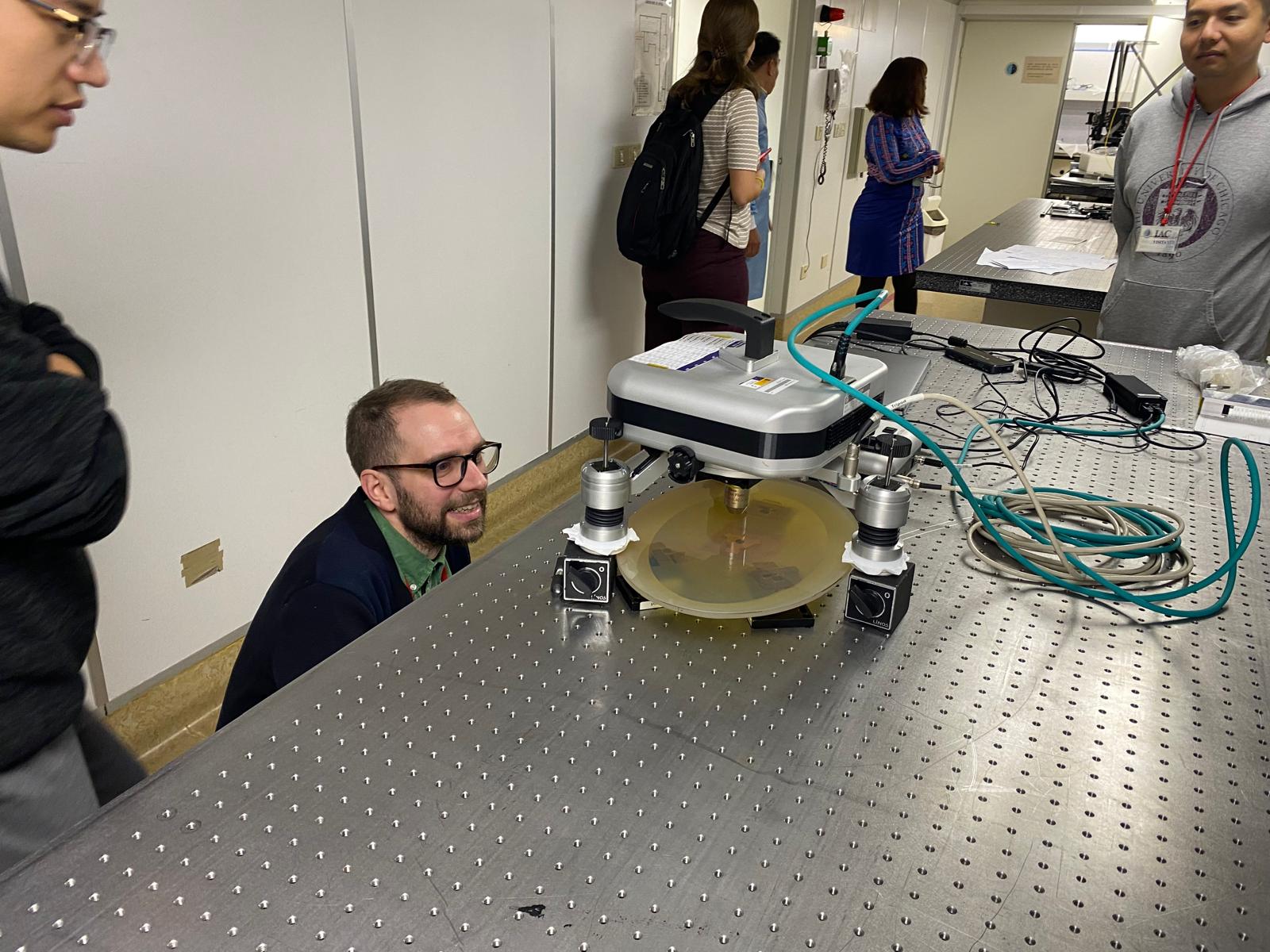
Dave Copley, systems engineer for LJMU, admires the IAC equipment. In particular (right hand image) the science fold (tertiary) mirror for NRT, fabricated by INAF and shipped from Italy to IAC for measurement. Initial tests show the surface flatness and roughness exceed expectations at ~10nm RMS!
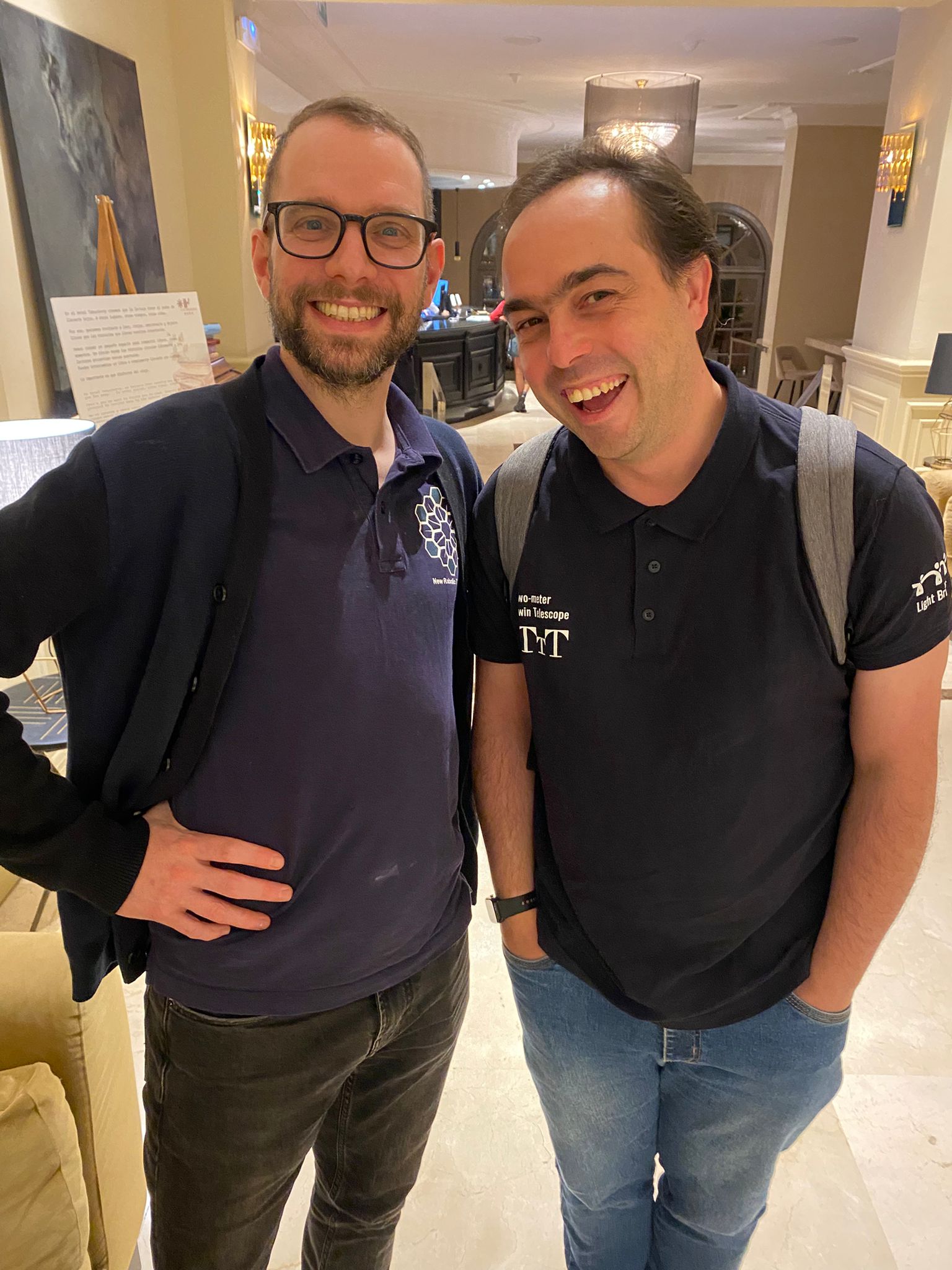
The team were also able to catch up with previous NRT LJMU employee João Bento, who now works for Light Bridges. The two teams are collaborating on a new spectrograph for the Twin Two-meter Telescopes at Teide Observatory, along with an acquisition and guidance box fondly named the 'Bento Box'.
Dave (left) and João (right) catch up in person in Tenerife
Article also on IAC website